
Series: Understanding Practical Bioethics (Session 3)
Organized by: Christian Medical Association of India (CMAI) in partnership with The Centre for Bioethics and CIHSR.
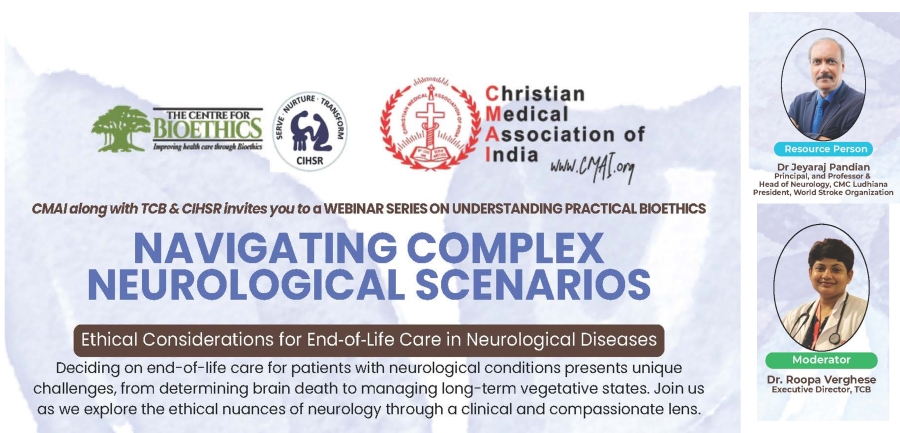
The Doctors Section of CMAI successfully conducted the third instalment of its "Understanding Practical Bioethics" webinar series on May 14, 2026. This session focused on one of the most challenging areas of clinical practice: "Ethical Considerations for End‑of‑Life Care in Neurological Diseases." The session was hosted by Dr Abhijeet Sangma and opened with a word of welcome by Dr Ronald Lalthanmawia (General Secretary, CMAI). Dr Ronald emphasized the increasing relevance of ethical clarity in modern medicine, where clinical dilemmas are becoming more complex. The resource person for the session was Dr Jeyaraj Pandian, Principal and Professor & Head of Neurology at CMC Ludhiana and President of the World Stroke Organization. The discussion was moderated by Dr Roopa Verghese, Executive Director of The Centre for Bioethics.
Key Clinical and Ethical Takeaways
Dr Pandian provided a deep dive into the nuances of neurological care, distinguishing between acute conditions like stroke and chronic degenerative diseases like ALS and Duchenne Muscular Dystrophy (DMD).
Core Discussion Points:
Reversibility vs. Futility: Dr. Pandian stressed the importance of identifying reversible triggers (such as pneumonia in a DMD patient) before assuming a condition is terminal.
Brain Death Criteria: A detailed explanation of the clinical diagnosis of brain death was provided, including the importance of the apnea test and the role of confirmatory tests like EEG.
Persistent Vegetative State (PVS): The session highlighted the ethical difference between brain death (legal death) and PVS, where the brainstem remains relatively preserved. Dr. Pandian shared a moving case from his experience in Australia regarding the challenges of communicating with PVS patients through eye movements.
The "Lazarus Phenomenon": Clinicians were cautioned about reflex movements that can occur after brain death, which often provide false hope to families and require careful, compassionate communication.
Cultural Sensitivities: The discussion noted that while Advance Medical Directives (AMDs) are legally recognized in India, their practical implementation is hindered by a lack of integrated electronic medical records and cultural hesitations.
The webinar demonstrated a wide geographic and professional reach:
Over 100 registered participants joined from more than 21 states across India.
The audience was highly clinical, with over 80% clinical staff and more than 40% were doctors.
About 3% of participants were Chaplains, reflecting the series' commitment to integrating spiritual care into ethical decision-making.
The Role of Holistic Care
A significant portion of the session was dedicated to the "caretaker burden." Dr Pandian and Dr Verghese emphasized that in Christian institutions, the role of the Chaplain and psychological counsellor is vital. Providing spiritual and emotional support to families helps them navigate the "what-if" guilt and make bold, dignity-focused decisions for their loved ones.
Looking Ahead: This session concluded the current focus on end-of-life ethics. The series will continue with a new theme next month.
Next Session: Topic: Law, Policy, and Digital Governance: Implications for Healthcare
Tentative Date: June 11, 2026
The recording and resources from this session is made available on the CMAI YouTube Channel. For further information or to access bioethics modules for your hospital staff, please contact the CMAI Doctors Section.